Home › Common Problems › Void Formation Under Slab
Void Formation Under Slab
in Kansas City, MO
Voids are empty air spaces that open up under a concrete slab when the soil beneath moves away. In Kansas City, clay soils shrink during dry summers and pull away from the slab. Aging under-slab plumbing leaks and washes soil away. In some eastern Kansas City neighborhoods, termite and rodent activity makes it worse. There is no warning sign on the surface until the slab actually drops, which makes these voids among the most dangerous foundation problems in the region.
Kansas City Foundation Repair Pros helps Kansas City, MO homeowners fix void formation under slab — call for a free inspection.
Quick Answer
Voids form when dry Kansas City summers shrink the clay soil away from the bottom of your slab. Old leaky pipes under the slab wash soil out too. There is no warning until the concrete drops. Crews fill voids by pumping a material under the slab to support it again. Call for an inspection if any part of your floor suddenly feels lower.
Telltale Signs
Warning Signs to Watch For
- A hollow sound when knocking on the concrete floor, as though tapping over an empty space
- A slab crack that appears suddenly rather than growing gradually over time
- Ceramic tile grout lines cracking in a pattern that traces the outline of a hidden void
- Subtle floor deflection or springiness felt underfoot in a home with a solid concrete floor
- Sinkholes or depressions appearing in the yard directly adjacent to the foundation
- Visible soil pulling away from the edge of the slab around the perimeter
Root Causes
What Causes Void Formation Under Slab?
Clay Shrinkage Void Formation
During the dry stretches Kansas City gets each summer, the clay under a slab loses moisture and pulls away from the concrete above. That leaves an air gap that can cover several square feet. The slab bridges the gap on its own strength, which is not much in an older or thin slab. A heavy appliance or concentrated foot traffic can crack the slab and drop it without warning.
The Fix
Polyurethane Foam Void Fill Injection
Small holes are drilled through the slab in a grid pattern over the void. High-density polyurethane foam is then injected to fill the air space and bond to both the slab and the soil below. The foam is lightweight and waterproof and gives the slab full support right away.
Erosion from Under-Slab Pipe Failure
Cast iron drain lines and old water supply pipes under Kansas City slabs from the 1940s through the 1960s develop slow leaks. Those leaks wash fine clay and silt out from under the slab over time. The water finds its way out through a crack or the perimeter, but the soil it carries gets left behind. That leaves a growing void that you cannot see from above.
The Fix
Plumbing Repair with Pressurized Void Grouting
The failed pipe gets repaired or replaced through a targeted slab cut. Then the void is filled using pressurized cementitious grout injection to restore solid contact under the slab. Injecting under pressure pushes the fill material to the farthest edges of the void, not just the area near the hole.
Termite and Rodent Tunnel Activity
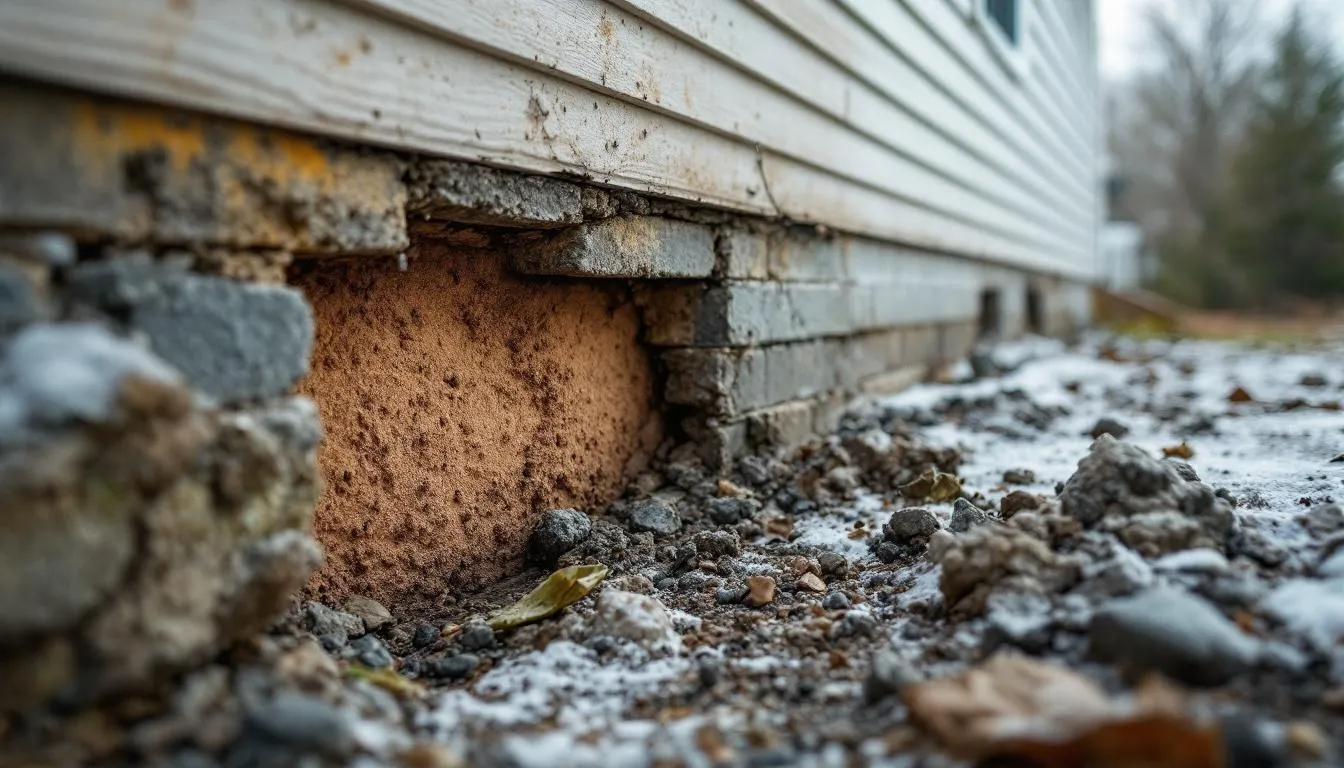
Eastern and central Kansas City neighborhoods have well-documented subterranean termite pressure, and the clay-rich soil is easy for termites and rodents to tunnel through. Termite galleries are networks of tunnels that termites eat through soil and wood. Those tunnels displace soil outward from under the slab. Over time the displaced volume gets large enough to leave a void that the slab can no longer bridge safely.
The Fix
Pest Remediation with Slab Void Stabilization
A pest control provider eliminates the termites or rodents first. Then foam injection or compaction grouting fills all the tunnel networks and restores solid support under the slab. Fixing only one side of the problem lets the other side keep going.
Self-Diagnosis
Which Cause Applies to You?
Check the signs you're observing to narrow down the likely root cause before your inspection.
| What You're Seeing | Clay Shrinkage Void Formation | Erosion from Under-Slab Pipe Failure | Termite and Rodent Tunnel Activity |
|---|---|---|---|
| Hollow sound when tapping the floor, widespread across several square feet | |||
| Small sinkholes appearing in landscaping beds immediately beside the foundation | |||
| Fine mud or sediment visible around a floor crack after rainfall | |||
| Mud tubes or termite frass visible in the crawl space or near the slab edge | |||
| Void discovered only after a tile section suddenly dropped during normal use |
Free Quote
Get a free quote in Kansas City
No obligation — tell us what's going on and we'll text you back shortly.
Other Problems
Services That Fix This
Void Formation Under Slab Near You
Also Helpful