Home › Common Problems › Foundation Drainage Problems
Foundation Drainage Problems
in Kansas City, MO
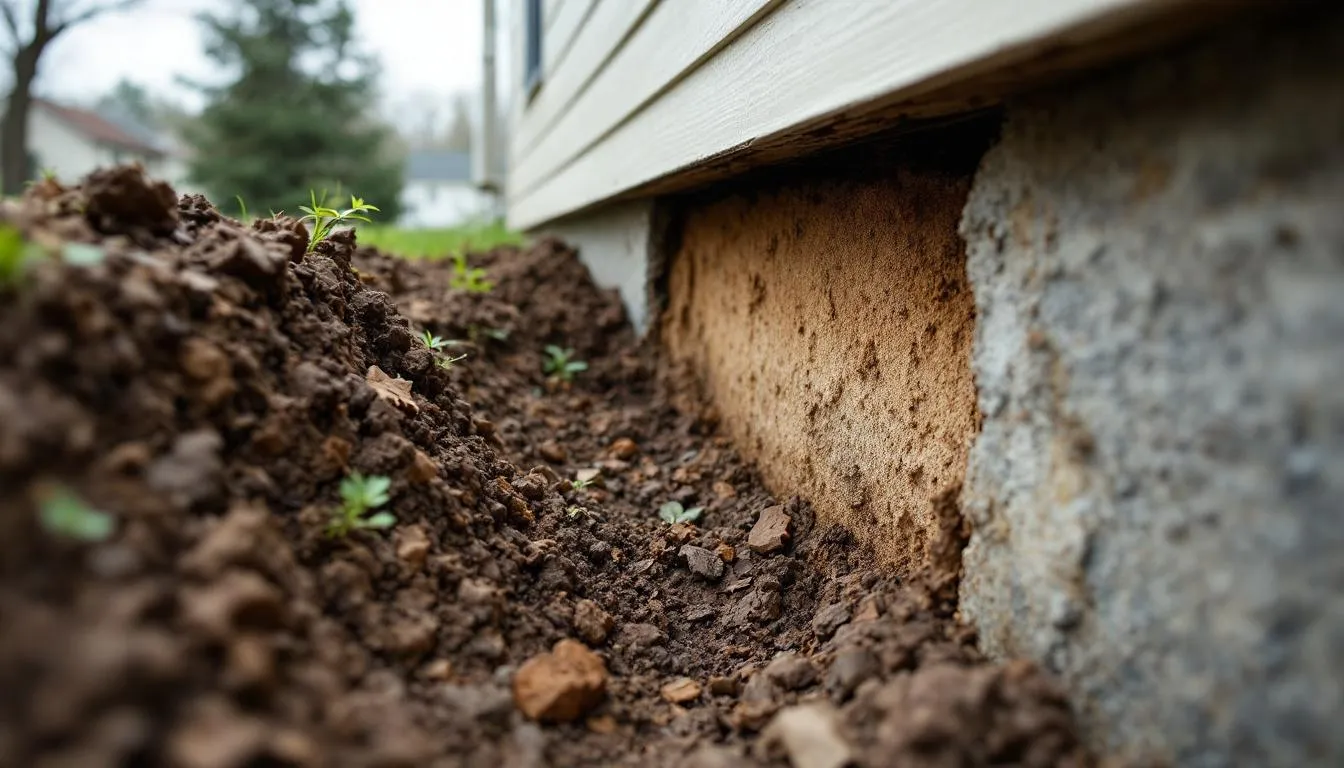
Foundation drainage problems happen when water has nowhere to go but against your house. Kansas City gets an average of 40 inches of rain per year, with intense thunderstorms common from April through September. The clay-heavy soil in most Kansas City neighborhoods does not absorb water well, so it ponds instead. Over time, that standing water erodes the soil under your footings and pushes hard against basement walls.
Kansas City Foundation Repair Pros helps Kansas City, MO homeowners fix foundation drainage problems — call for a free inspection.
Quick Answer
Kansas City gets about 40 inches of rain a year and the clay soil here does not soak it up. Water ponds against your house and eats away the soil under your footings. Crews fix this by regrading the yard and adding drains that move water away fast. Call for an inspection if water sits next to your house for hours after rain.
Telltale Signs
Warning Signs to Watch For
- Standing water visible along the foundation perimeter after a moderate rainfall
- Soil grade around the home slopes toward the house rather than away from it
- Downspout discharge depositing water directly against the foundation wall
- White powdery mineral deposits (efflorescence) on basement or crawl space walls
- Wet spots or seepage on the interior basement floor or wall base after rain
- Soft, saturated soil along one side of the foundation that stays wet for days
Root Causes
What Causes Foundation Drainage Problems?
Improper Yard Grading
Many Kansas City homes sit on lots where the yard slopes toward the house instead of away from it. This happens on filled lots or where landscaping has settled over the years. Kansas City thunderstorms can drop one to two inches of rain in an hour. When that happens, all that runoff flows straight toward the foundation wall and soaks into the soil right next to the footing.
The Fix
Regrading and Swale Installation
The soil around the foundation is reshaped so it drops at least 6 inches within the first 10 feet. On tight urban lots in Kansas City's older neighborhoods, a swale is cut to carry water sideways to the street or a drain inlet. A swale is a shallow channel dug into the yard.
Failed or Absent Gutter and Downspout System
A gutter system collects rain that runs off your roof and moves it away from the foundation. Kansas City storms can dump thousands of gallons on a single roof. When gutters are clogged from Kansas City's heavy tree cover, water pours straight down next to the footing. That soaks the soil in one narrow strip right where it does the most damage.
The Fix
Gutter Repair with Downspout Extension
Gutters are cleaned and re-pitched so water stops overflowing. Downspouts get extended with underground drain lines that empty at least 10 feet from the foundation. Burying the extension keeps it from getting mowed over and puts the water well away from the foundation.
Failed Perimeter Drain System
Many Kansas City homes built in the 1960s through 1980s have a perforated drain tile around the footing. Drain tile is a pipe that collects underground water before it reaches the wall. After 40 to 60 years, those clay or early plastic pipes collapse and clog with clay. Once the drain fails, water pressure builds against the wall every wet season.
The Fix
Exterior French Drain Installation
We dig along the foundation, pull out the failed pipe, and put in a new perforated pipe. It sits in washed gravel and filter fabric and slopes to daylight or a sump. That stops water from building up pressure against the wall.
Self-Diagnosis
Which Cause Applies to You?
Check the signs you're observing to narrow down the likely root cause before your inspection.
| What You're Seeing | Improper Yard Grading | Failed or Absent Gutter and Downspout System | Failed Perimeter Drain System |
|---|---|---|---|
| Water pools visibly against the house for hours after moderate rainfall | |||
| Wet basement wall is directly below a downspout that terminates at the foundation | |||
| Basement seepage occurs even in dry weather during periods of high water table | |||
| Saturated soil consistently on one side of the house regardless of downspout location | |||
| Overflow pouring over gutter edges visible during rainstorms from inside windows | |||
| Efflorescence concentrated at the base of a basement wall on the uphill side of the lot |
Free Quote
Get a free quote in Kansas City
No obligation — tell us what's going on and we'll text you back shortly.
Other Problems
Services That Fix This
Foundation Drainage Problems Near You
Also Helpful