Home › Common Problems › Slab Foundation Cracks
Slab Foundation Cracks
in Kansas City, MO
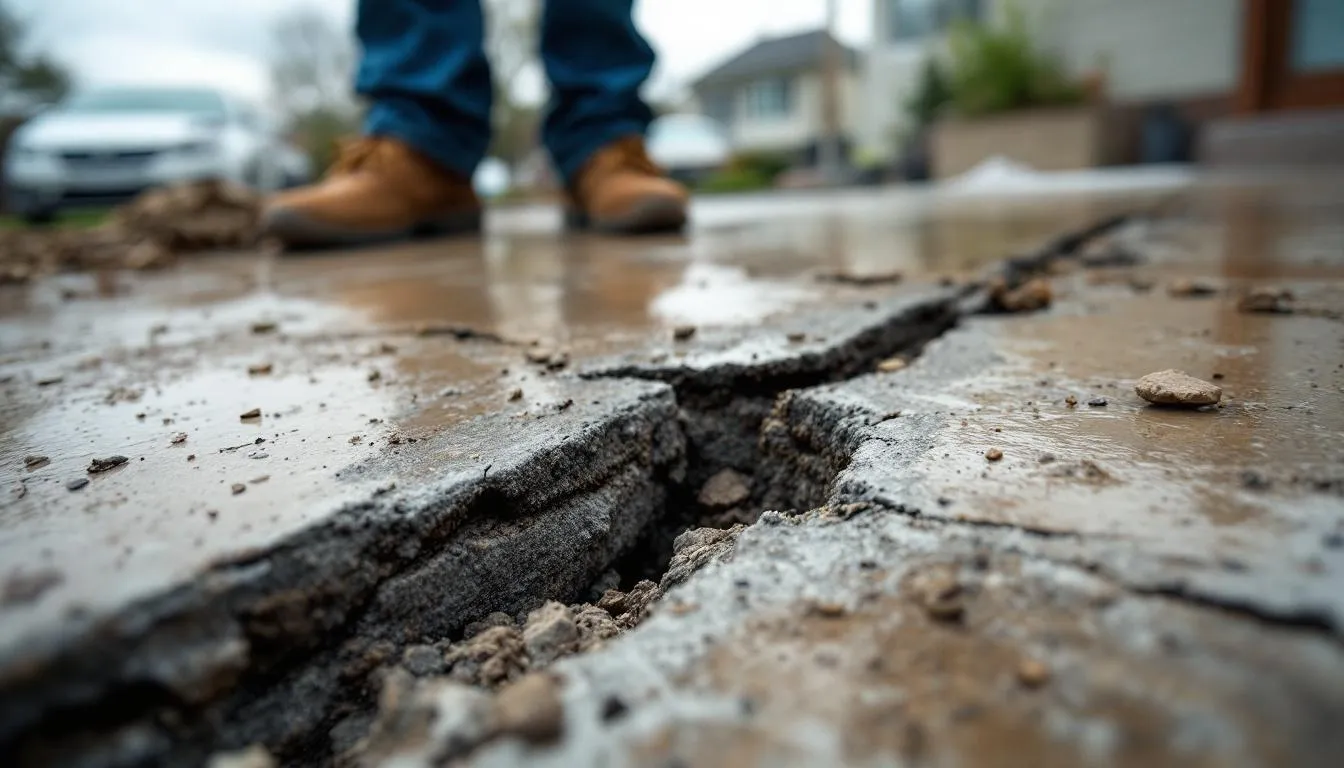
Slab cracks are breaks in the concrete floor that also serves as the foundation. Many Kansas City ranch-style and split-level homes built from the 1950s onward have this type of foundation. The expansive clay soil under Kansas City slabs swells when wet and shrinks when dry. If you wait, the cracks widen, water gets in, and the repair gets much harder.
Kansas City Foundation Repair Pros helps Kansas City, MO homeowners fix slab foundation cracks — call for a free inspection.
Quick Answer
Slab cracks form when Kansas City's clay soil swells and shrinks under your concrete floor. Many older ranch and split-level homes here sit right on that kind of soil. A repair crew can fill and stabilize small cracks before they grow. Call for an inspection if a crack is wider than a quarter-inch or if a door suddenly stops closing right.
Telltale Signs
Warning Signs to Watch For
- Visible cracks running across the finished floor, sometimes following grout lines in tile
- Tile or hardwood flooring buckling, popping loose, or cracking along a line
- A musty or earthy smell near floor level suggesting moisture entry through the slab
- Doors in interior partition walls scraping the floor or failing to close completely
- Uneven floor surface you can feel when walking barefoot across the room
- Water seeping up through a floor crack after heavy Kansas City rainfall events
Root Causes
What Causes Slab Foundation Cracks?
Clay Soil Heave Pressure
Kansas City clay soils soak up spring rain and snowmelt and push upward against the bottom of the slab. Heave is the term for this upward push. When the push is uneven, one part of the slab lifts more than another and the slab bends and cracks.
The Fix
Slab Stabilization with Mudjacking or Polyurethane Lift
Foam or grout is injected under the slab to fill empty spaces and lift it back to level. The material sets quickly and holds up better than the loose soil that was there before.
Plumbing Leak Beneath Slab
Older Kansas City homes often have cast iron or galvanized pipes running under the slab. Those pipes corrode over decades and start to leak. The leaking water softens the clay soil below and washes away fine particles, leaving voids that let the slab crack and sag.
The Fix
Under-Slab Plumbing Repair with Slab Restoration
A plumber cuts into the slab to reach and fix or reroute the broken pipe. After that, the soil is compacted, the voids are filled, and new concrete replaces what was cut out.
Inadequate Slab Thickness or Reinforcement
Many Kansas City slabs poured before modern building codes are only three to four inches thick. Rebar is the steel rod embedded in concrete to give it strength. Without enough thickness or rebar, the slab cracks under normal loads and Missouri's wide temperature swings.
The Fix
Slab Crack Repair with Carbon Fiber Stitching
Epoxy is injected into the crack to bond the two faces back together. Then carbon fiber staples are installed across the crack to stop it from spreading.
Self-Diagnosis
Which Cause Applies to You?
Check the signs you're observing to narrow down the likely root cause before your inspection.
| What You're Seeing | Clay Soil Heave Pressure | Plumbing Leak Beneath Slab | Inadequate Slab Thickness or Reinforcement |
|---|---|---|---|
| Crack follows a curved path across the slab and is widest at the center of the room | |||
| Water visible seeping upward through a floor crack after rainfall | |||
| Crack is straight, narrow, and located near a wall where a pipe enters the slab | |||
| Multiple cracks visible in a home built before 1960 with no prior water history | |||
| Soft or spongy feeling underfoot near a specific slab crack location | |||
| Crack widens noticeably in late spring after sustained heavy rainfall periods |
Free Quote
Get a free quote in Kansas City
No obligation — tell us what's going on and we'll text you back shortly.
Other Problems
Services That Fix This
Slab Foundation Cracks Near You
Also Helpful