Home › Common Problems › Foundation Upheaval
Foundation Upheaval
in Kansas City, MO
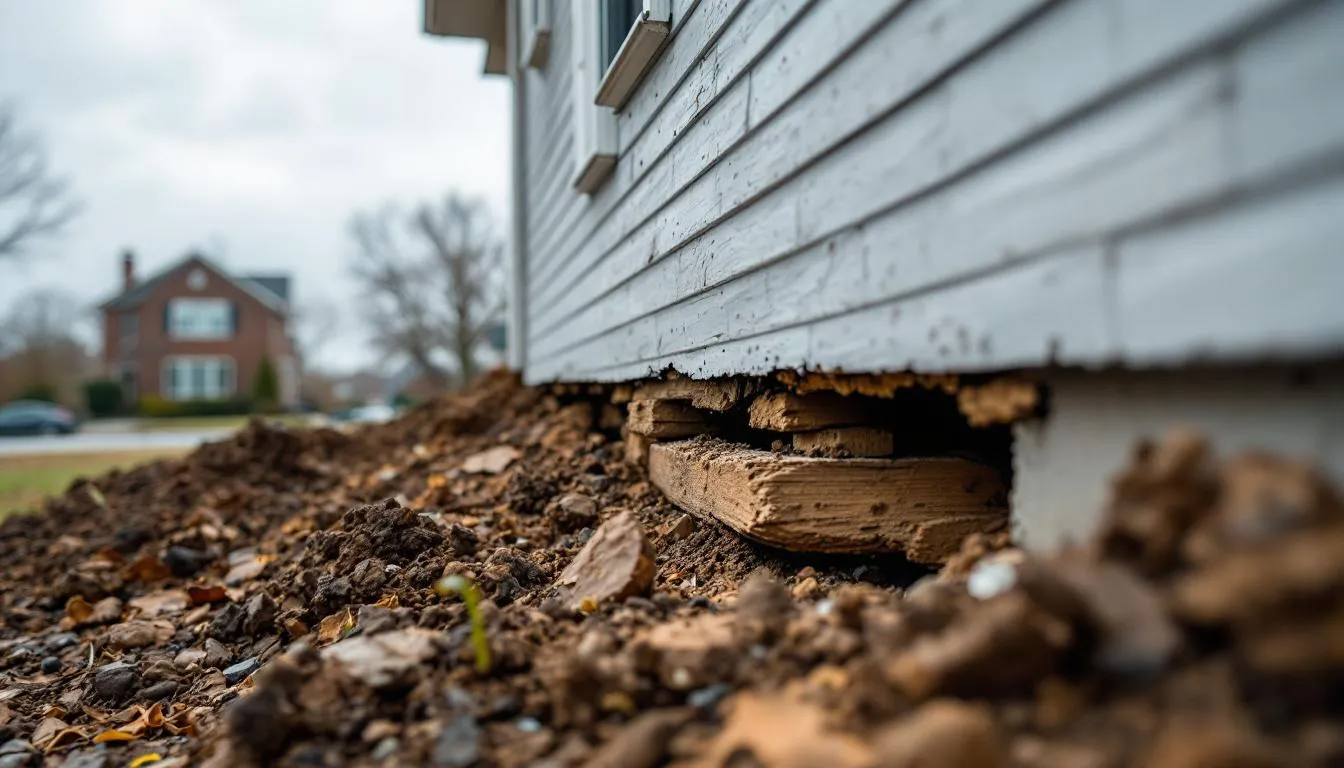
Foundation upheaval means the ground is pushing your foundation up from below. Kansas City sits on Vertic clay soils, some of the most expansive in the Midwest. Those soils can swell 10 to 15 percent in volume when saturated, pushing up with thousands of pounds of pressure per square foot. Unlike settlement, upheaval lifts sections of your foundation up, and that different crack pattern often gets misdiagnosed until real damage is done.
Kansas City Foundation Repair Pros helps Kansas City, MO homeowners fix foundation upheaval — call for a free inspection.
Quick Answer
Upheaval means the ground is pushing your foundation up instead of pulling it down. Kansas City's Vertic clay soils swell with tons of force when they get soaked. The fix starts with controlling where water goes around your home. Call for an inspection if floors are buckling upward or interior doors are suddenly hard to open from the top.
Telltale Signs
Warning Signs to Watch For
- Interior doors drag against the top of the door frame rather than the bottom
- Floor cracks where the center section of a room is higher than the perimeter
- Baseboards lifting away from the floor at the center of a room
- Tiles cracking or popping off the floor surface in the interior of a room
- Visible hump or ridge in the floor running across the middle of a room
Root Causes
What Causes Foundation Upheaval?
Expansive Clay Moisture Saturation
Kansas City gets heavy spring rains when Gulf moisture rolls in from the south. The expansive Vertic clay soils under the slab soak up that water and swell. Because the slab sits on top, the pressure has nowhere to go but up, and the interior of the slab lifts first.
The Fix
Controlled Drainage and Soil Moisture Management
French drains and root barriers around the perimeter reduce how much water reaches the soil under the slab. In bad cases, some soil is removed under the slab so the clay has room to expand without pushing the slab up.
Tree Root Intrusion and Moisture Redistribution
Large silver maples, cottonwoods, and elms are common in older Kansas City neighborhoods. During dry spells, their roots pull moisture from the soil under the slab and the clay shrinks and the slab settles. When the tree dies or is removed, that dried-out clay rehydrates fast and swells upward under the slab.
The Fix
Root Barrier Installation with Slab Re-leveling
Deep root barriers are installed along the drip line of nearby trees to push root growth away from the foundation. Affected slab sections are then lifted and re-leveled with polyurethane foam injection to restore even bearing.
Frost Heave in Shallow Footings
Kansas City winters regularly push ground frost 12 to 18 inches deep. A footing is the concrete base that holds up your foundation wall. Any footing that does not reach below that frost depth will heave when wet soil freezes and expands. Older homes and converted garages with shallow footings are especially prone to this every winter.
The Fix
Footing Extension and Frost-Depth Underpinning
Shallow footings are extended deeper using underpinning with concrete or helical piers. The goal is to get below Missouri's frost depth so freezing ground can no longer push the footing up.
Self-Diagnosis
Which Cause Applies to You?
Check the signs you're observing to narrow down the likely root cause before your inspection.
| What You're Seeing | Expansive Clay Moisture Saturation | Tree Root Intrusion and Moisture Redistribution | Frost Heave in Shallow Footings |
|---|---|---|---|
| Hump in the floor directly where a large tree was recently removed in the yard | |||
| Uplift movement is most severe in spring after the wettest winters on record | |||
| Floor rises and partially settles back each season in a repeating annual pattern | |||
| Interior floor is higher than the perimeter edges of the same slab | |||
| Upheaval concentrated in the area beneath and around a mature tree's canopy |
Free Quote
Get a free quote in Kansas City
No obligation — tell us what's going on and we'll text you back shortly.
Other Problems
Services That Fix This
Foundation Upheaval Near You
Also Helpful