Home › Common Problems › Foundation Settlement & Sinking
Foundation Settlement & Sinking
in Kansas City, MO
Foundation settlement happens when the soil under your home shifts or compresses and the house starts to sink unevenly. In Kansas City, the plastic clays found throughout Johnson and Jackson counties shrink hard during summer droughts and swell again with fall and spring rains. That constant cycle destabilizes footings over time. Left alone, settlement can fracture load-bearing walls and permanently jam doors and windows.
Kansas City Foundation Repair Pros helps Kansas City, MO homeowners fix foundation settlement & sinking — call for a free inspection.
Quick Answer
Your house is slowly sinking because the clay soil in Kansas City shrinks in dry summers and swells back in wet seasons. That back-and-forth pulls the ground away from your footings. Steel piers or helical piers get driven down past that unstable clay to hold the house steady. Call for an inspection if you see sloping floors or new wall cracks.
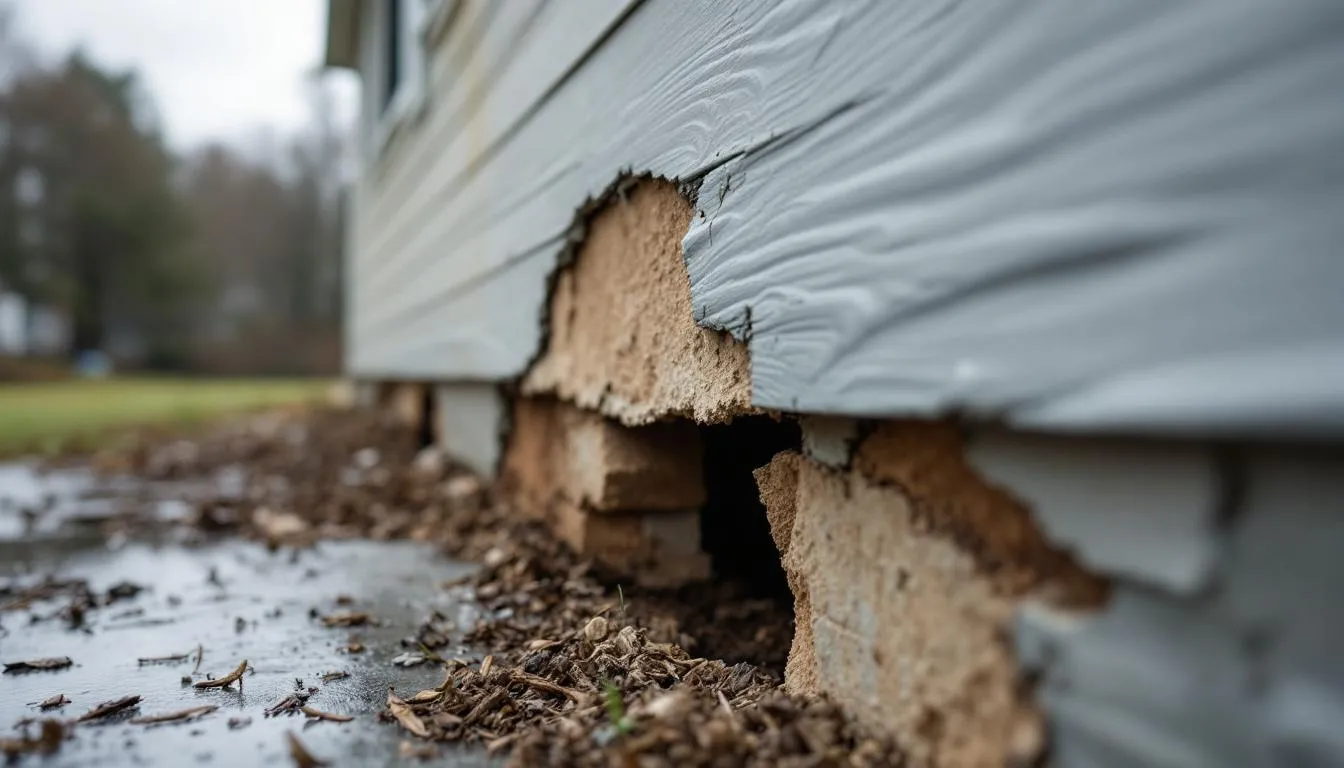
Telltale Signs
Warning Signs to Watch For
- Visible gaps between the floor and baseboards or walls pulling away from the ceiling
- Doors and windows that suddenly stick, jam, or no longer latch properly
- Diagonal cracks running from the corners of window and door frames
- Sloping or bouncy floors that were previously level
- Cracks in drywall that reappear after patching, especially near interior corners
- Chimney leaning away from the main structure or separating at the roofline
Root Causes
What Causes Foundation Settlement & Sinking?
Expansive Clay Soil Shrinkage
Kansas City sits on thick deposits of Shawnee and Grundy clay soils. These clays lose a significant amount of volume during the hot, dry summers common to this region. As moisture evaporates from beneath footings, the clay contracts and pulls away. That leaves voids, and the foundation drops in an uneven pattern.
The Fix
Helical Pier Installation
Helical piers are steel shafts screwed deep through the unstable clay layer down to load-bearing strata below. They transfer the home's weight past the problem soil. This stops settlement and in many cases allows controlled lifting to bring the foundation back closer to its original elevation.
Poor Original Soil Compaction
Many Kansas City homes built during the 1950s and 1960s were constructed on lots where fill soil was placed but never properly compacted. Over decades, that loosely placed fill compresses under the home's weight. The sinking is gradual but keeps getting worse as the fill continues to densify.
The Fix
Push Pier Installation
Steel push piers are driven through unstable fill until they hit solid soil or bedrock. Then they lock onto a bracket attached to your foundation to hold it in place.
Erosion from Poor Drainage
Kansas City gets about 40 inches of rain each year. Intense spring thunderstorms can wash fine soil out from under footings. Once that soil is gone, the footing has nothing solid to rest on and that corner starts to drop.
The Fix
Pier Stabilization with Drainage Correction
Piers stop the foundation from moving further. Then the ground around your house is regraded so water runs away from the foundation. Downspouts are extended and drains are added to keep stormwater away.
Self-Diagnosis
Which Cause Applies to You?
Check the signs you're observing to narrow down the likely root cause before your inspection.
| What You're Seeing | Expansive Clay Soil Shrinkage | Poor Original Soil Compaction | Erosion from Poor Drainage |
|---|---|---|---|
| Diagonal cracks at door and window corners on one side of house only | |||
| Settlement concentrated at a corner near a downspout or low grading area | |||
| Widespread sinking across the entire footprint of an older post-war home | |||
| Seasonal cracking that widens in late summer and partially closes in spring | |||
| Floors slope toward the center of the home rather than an exterior wall | |||
| Chimney visibly separating and tilting away from the house structure |
Free Quote
Get a free quote in Kansas City
No obligation — tell us what's going on and we'll text you back shortly.
Other Problems
Services That Fix This
Foundation Settlement & Sinking Near You
Also Helpful